Why staying near 2,000 kPa (about 300 psi) at comparable moisture protects roots and infiltration — and how TerraTactics logs penetrometer tests beside GPS soil screens.
Compacted soil is not a personality trait of a paddock. It is a physical condition: fewer connected pores, slower infiltration, roots that turn sideways, and plants that run out of water in a dry finish even when the season looked fair. Australian mixed and dryland country sees it on gateways, header tracks, spray tramlines, sheep camps after wet winters, and anywhere heavy machinery worked the profile when it was plastic rather than friable. You cannot lime it away. You cannot fertilise through it. You can, however, see it coming if you measure resistance at named points and keep those tests on the same farm record as your TerraProbe screens.
This Field Note is about the target range growers actually use in the paddock, why being in that range pays, and how TerraTactics treats compaction as a first-class record — not a beta afterthought and not an eighth chemistry tab.
WHAT COMPACTION DOES TO A CROP AND A PASTURE
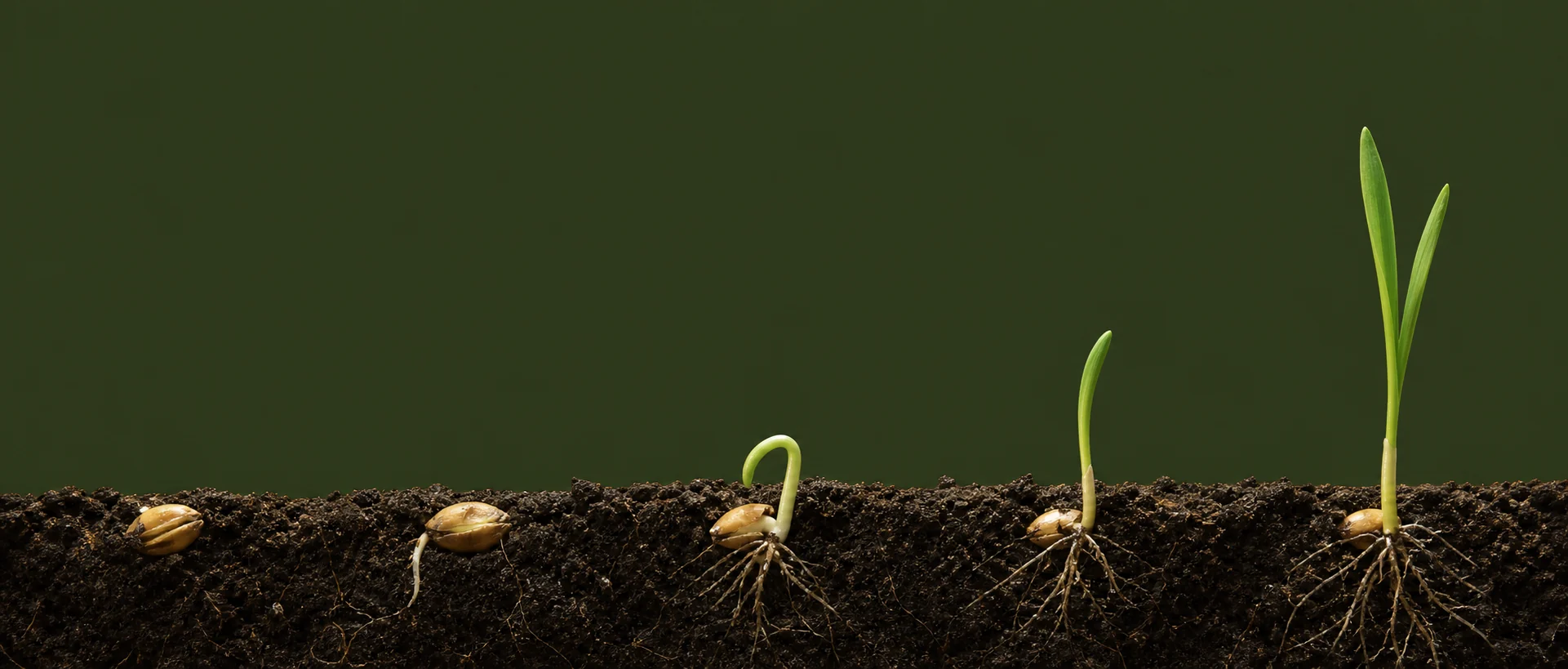
Roots need air-filled pores and a path. When bulk density rises, roots spend energy pushing instead of exploring. Water that should enter the profile runs off or perches above a pan, then the soil below stays dry. NSW DPI and GRDC compaction resources describe the same pattern: restricted rooting depth, poorer trafficability after rain, and yield maps that stripe along working directions.
On grazing country the cost is quieter. Camp and gateway approaches set hard; infiltration falls; dung and urine concentrate on the same sealed surface. The paddock average still looks acceptable because you never sample the track. Named points exist so that mistake is harder to make.
THE TARGET RANGE — AND WHY MOISTURE COMES FIRST
A gauged cone penetrometer reports resistance, usually in pounds per square inch (psi) on analogue dials or kilopascals (kPa) on digital units. A figure that Australian agronomy conversations return to, again and again, is about 2,000 kPa — roughly 300 psi — as a root-restriction cue when soil is at a comparable, moist condition (not bone dry, not slurry).
Below that band, at similar moisture and with a consistent cone and insertion speed, roots generally have a better chance of exploring. Around and above it, especially if the same depth keeps lighting up on repeat visits, you have a reason to look: traffic pattern, tillage timing, stocking on wet ground, or a texture change. That is a cue, not a ripping order. Resistance climbs as soil dries. Clay, stones and roots all spike a reading. A hard number on a baked January afternoon does not mean the same as a hard number two days after 14 mm.
Stay in the target range and you typically keep:
Faster infiltration after rain, so more of the fall you paid for stays in the profile.
Deeper, more even rooting, so the plant can chase moisture instead of sitting on a plate.
Less ponding and less runoff on sloping approaches.
A cleaner comparison next season, because you are not mixing a sealed gateway with a representative mid-paddock point.
Leave the range on traffic lines and you typically get the opposite: water sitting where you do not want it, roots turning at a familiar depth, and a yield or pasture strip that survives every variety change.
HOW TO MEASURE SO IT MEANS SOMETHING
Use the manufacturer’s cone. Push vertically at a steady rate. Record the depth where resistance begins, peaks and eases. Compare wheel track with inter-row, headland with paddock centre, gateway with a named mid-paddock control — on the same day, at similar moisture. Write the moisture down. If you already take a TerraProbe reading at that GPS pin, you already have moisture, EC and temperature sitting beside the penetrometer number. That pairing is the point.
Do not average a gateway into the paddock figure. Name it “Stockyard gateway” and leave “Stockyard 01” as the soil point. TerraTactics Compaction in TerraTactics Field Intelligence and Farm record → Compaction is built for exactly that pairing: depth, resistance in PSI or kPa, optional GPS, a short note.
WHY THE FARM PORTAL MATTERS
A penetrometer without a place to live becomes a story you tell at the ute. Next season nobody remembers whether the hard layer was at ten centimetres or twenty, or whether the soil was wet. Logging the test into TerraTactics puts compaction on the same map and the same named points as the seven soil indicators. You can show an agronomist a gateway that sits at 2,800 kPa beside a mid-paddock point at 1,450 kPa after the same rain — evidence, not folklore.
The probe still does not measure compaction. Compaction is a physical test you add. Chemistry screens do not diagnose a pan. A pan does not set a lime rate. Keep the jobs separate and both records get more honest.
WHAT TO DO WHEN YOU ARE OUTSIDE THE RANGE
Rest traffic on wet approaches. Keep cover. Check whether the hard layer is a stone, a plough pan, or a texture change by digging a few representative holes. If the same depth repeats across moist visits, and roots confirm a plate, that is when controlled traffic, timing of tillage, or a ripping conversation with your agronomist earns its keep. Confirm cause and depth before you spend. TerraTactics will not write that prescription. It will keep the numbers that make the conversation shorter.
THE HONEST LIMIT
Penetrometer technique varies between operators. Cone size matters. Moisture dominates. A single high reading is a prompt to repeat, not a capital works program. Stay in the target range where you can, name the places you cannot, and keep both on the farm record so next year you are arguing with data instead of memory.
This Field Note is about the target range growers actually use in the paddock, why being in that range pays, and how TerraTactics treats compaction as a first-class record — not a beta afterthought and not an eighth chemistry tab.
WHAT COMPACTION DOES TO A CROP AND A PASTURE
Roots need air-filled pores and a path. When bulk density rises, roots spend energy pushing instead of exploring. Water that should enter the profile runs off or perches above a pan, then the soil below stays dry. NSW DPI and GRDC compaction resources describe the same pattern: restricted rooting depth, poorer trafficability after rain, and yield maps that stripe along working directions.
On grazing country the cost is quieter. Camp and gateway approaches set hard; infiltration falls; dung and urine concentrate on the same sealed surface. The paddock average still looks acceptable because you never sample the track. Named points exist so that mistake is harder to make.
THE TARGET RANGE — AND WHY MOISTURE COMES FIRST
A gauged cone penetrometer reports resistance, usually in pounds per square inch (psi) on analogue dials or kilopascals (kPa) on digital units. A figure that Australian agronomy conversations return to, again and again, is about 2,000 kPa — roughly 300 psi — as a root-restriction cue when soil is at a comparable, moist condition (not bone dry, not slurry).
Below that band, at similar moisture and with a consistent cone and insertion speed, roots generally have a better chance of exploring. Around and above it, especially if the same depth keeps lighting up on repeat visits, you have a reason to look: traffic pattern, tillage timing, stocking on wet ground, or a texture change. That is a cue, not a ripping order. Resistance climbs as soil dries. Clay, stones and roots all spike a reading. A hard number on a baked January afternoon does not mean the same as a hard number two days after 14 mm.
Stay in the target range and you typically keep:
Faster infiltration after rain, so more of the fall you paid for stays in the profile.
Deeper, more even rooting, so the plant can chase moisture instead of sitting on a plate.
Less ponding and less runoff on sloping approaches.
A cleaner comparison next season, because you are not mixing a sealed gateway with a representative mid-paddock point.
Leave the range on traffic lines and you typically get the opposite: water sitting where you do not want it, roots turning at a familiar depth, and a yield or pasture strip that survives every variety change.
HOW TO MEASURE SO IT MEANS SOMETHING
Use the manufacturer’s cone. Push vertically at a steady rate. Record the depth where resistance begins, peaks and eases. Compare wheel track with inter-row, headland with paddock centre, gateway with a named mid-paddock control — on the same day, at similar moisture. Write the moisture down. If you already take a TerraProbe reading at that GPS pin, you already have moisture, EC and temperature sitting beside the penetrometer number. That pairing is the point.
Do not average a gateway into the paddock figure. Name it “Stockyard gateway” and leave “Stockyard 01” as the soil point. TerraTactics Compaction in TerraTactics Field Intelligence and Farm record → Compaction is built for exactly that pairing: depth, resistance in PSI or kPa, optional GPS, a short note.
WHY THE FARM PORTAL MATTERS
A penetrometer without a place to live becomes a story you tell at the ute. Next season nobody remembers whether the hard layer was at ten centimetres or twenty, or whether the soil was wet. Logging the test into TerraTactics puts compaction on the same map and the same named points as the seven soil indicators. You can show an agronomist a gateway that sits at 2,800 kPa beside a mid-paddock point at 1,450 kPa after the same rain — evidence, not folklore.
The probe still does not measure compaction. Compaction is a physical test you add. Chemistry screens do not diagnose a pan. A pan does not set a lime rate. Keep the jobs separate and both records get more honest.
WHAT TO DO WHEN YOU ARE OUTSIDE THE RANGE
Rest traffic on wet approaches. Keep cover. Check whether the hard layer is a stone, a plough pan, or a texture change by digging a few representative holes. If the same depth repeats across moist visits, and roots confirm a plate, that is when controlled traffic, timing of tillage, or a ripping conversation with your agronomist earns its keep. Confirm cause and depth before you spend. TerraTactics will not write that prescription. It will keep the numbers that make the conversation shorter.
THE HONEST LIMIT
Penetrometer technique varies between operators. Cone size matters. Moisture dominates. A single high reading is a prompt to repeat, not a capital works program. Stay in the target range where you can, name the places you cannot, and keep both on the farm record so next year you are arguing with data instead of memory.
A screening reading is a starting point
TerraTactics readings help you target follow-up sampling. Confirm anything material with
accredited laboratory testing and a qualified local agronomist.
Published 14 June 2026 by David Gilbert