
Direct the lab budget
Same spend, better placed samples. Screen the paddock; send chemistry where variation lives.
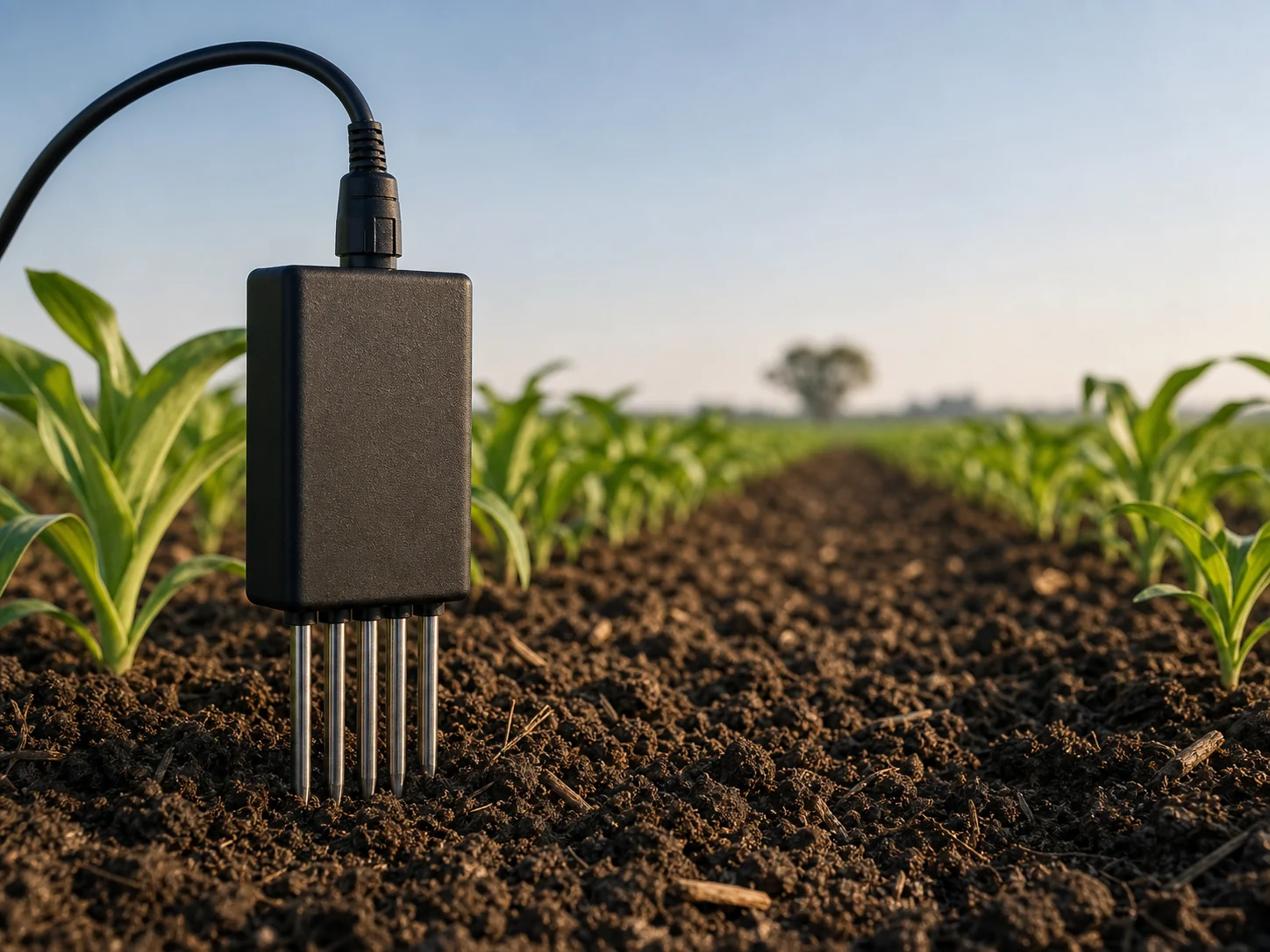
TerraProbe
One USB-C probe, one GPS farm record, and measured EC at the centre — so you can see where a paddock changes and direct laboratory spend with better context.
Order the probe
Seven soil indicators from every sample, with measured EC at the centre and every reading saved to a GPS farm record.
In the box
Probe, 1 m USB-C cable, carry case, quick guide Twelve-month warranty against manufacturing fault.
Create a free account to check out — it is also where your soil record lives.
What the probe is for
The commercial value is not four screened nutrient numbers. It is measured conductivity, a comparable moisture and temperature context, and a GPS record that puts laboratory money where the paddock actually varies.
Same spend, better placed samples. Screen the paddock; send chemistry where variation lives.
Walk points on the same day and see where EC, moisture or temperature diverge across a paddock.
Conductivity is measured — not screened. Trends at a fixed point flag salt load before a season gets expensive.
Return to the same GPS points under similar moisture. The portal holds the film between lab snapshots.
It will not set a nutrient or lime rate. That stays with accredited laboratory testing and a qualified local agronomist — and we say so on the reading.
In one insertion
Moisture, EC and temperature are measured directly. pH, N, P and K are indicative values calculated from conductivity — one signal about salts and fertility, labelled so the difference is always visible. Tap each indicator for how it works.
Moisture · % Measured
Measured directly. Specified to ±2% between 0 and 50% moisture, ±3% above that.
Moisture drives whether nutrients can move to roots, how plants cope between falls of rain, and whether a dry or wet spell is showing up in that paddock yet. Tracked at the same GPS point, it shows how the profile fills and empties across a season.
Is this paddock drying faster than the one next door? Did the last rain reach the depth I care about?
Measured directly by the probe. Comparable between visits when you sample at a similar depth and moisture.
Conductivity · µS/cm Measured
Measured directly, to ±3% of full scale. Needs soil moisture above about 20% to be meaningful.
Salts affect how hard roots work for water and can flag fertiliser residue or rising salinity. EC moves with moisture, so comparing readings at similar wetness — or watching the trend at one point — is more useful than a single number alone. It is also the measurement the pH, N, P and K screens are calculated from, which is why it repays attention.
Is EC climbing where I have been applying product? Does it fall after rain the way I expect?
Measured directly by the probe. Comparable between visits when you sample at a similar depth and moisture.
Temperature · °C Measured
Measured directly, to ±1°C.
Warmth and cold change microbial activity and how plants respond. Temperature also helps you interpret moisture and nutrient readings taken on different days. Saved with the sample, it stops you comparing a July reading to a January one as if they were the same conditions.
Am I sampling in comparable conditions? Has the profile warmed enough for the season I am planning around?
Measured directly by the probe. Comparable between visits when you sample at a similar depth and moisture.
pH Screened
Screened, not measured. This probe has no pH electrode — the value is calculated from the conductivity reading and reported across a 3–9 range. Treat a shift as a reason to book a laboratory pH test, not as a pH figure to act on.
pH sits underneath nutrient uptake, and when it drifts the same fertiliser program can look weaker without anything else changing. That makes it worth watching — but it also makes it worth measuring properly. A laboratory pH, reported against CaCl₂, is what a liming decision needs.
Has this corner moved since last season? Is that shift worth a lab suite?
Screened from the conductivity reading, not measured directly. pH, N, P and K are all calculated from that one measurement, so they rise and fall together — read them as a single signal about salts and fertility, not four independent results. Use accredited laboratory testing for any decision that needs a number.
Nitrogen · mg/kg Screened
Screened, not measured. Calculated from conductivity using a stored coefficient, so it responds to total dissolved salts rather than to nitrogen specifically.
Nitrogen is mobile and changes quickly with moisture, temperature and crop demand, which is exactly why a lab snapshot weeks later can miss what the paddock was doing. A screen is for seeing relative change and hotspots between points sampled the same day in the same soil — never for writing a rate.
Where does this look different across the paddock? Is the pattern worth chasing with proper chemistry?
Screened from the conductivity reading, not measured directly. pH, N, P and K are all calculated from that one measurement, so they rise and fall together — read them as a single signal about salts and fertility, not four independent results. Use accredited laboratory testing for any decision that needs a number.
Phosphorus · mg/kg Screened
Screened, not measured, from the same conductivity reading as N and K.
Phosphorus underpins root establishment and energy in the plant, and it moves slowly — so spatial differences persist. A low patch stays low unless you address it. Use the screen to decide where a targeted lab suite is worth paying for, rather than testing every hectare.
Is the low area the same place as last year? Is the variation worth a targeted lab suite?
Screened from the conductivity reading, not measured directly. pH, N, P and K are all calculated from that one measurement, so they rise and fall together — read them as a single signal about salts and fertility, not four independent results. Use accredited laboratory testing for any decision that needs a number.
Potassium · mg/kg Screened
Screened, not measured, from the same conductivity reading as N and P.
Potassium helps plants regulate water and respond to stress. Watching it at fixed points can show whether a paddock is drifting relative to its own history — but a portable reading is a lead, not a prescription.
Is this falling in the zones that work hardest through dry stretches? Does it track with stress I already notice?
Screened from the conductivity reading, not measured directly. pH, N, P and K are all calculated from that one measurement, so they rise and fall together — read them as a single signal about salts and fertility, not four independent results. Use accredited laboratory testing for any decision that needs a number.
Spend where it counts
A commercial soil suite is still the right tool when a decision needs accredited chemistry. The probe is for everything that happens before that — spotting change, narrowing where to spend, and keeping a record you can compare next season.
Typical lab soil suite
$80–$150+
per sample · days of turnaround
TerraProbe screening
One buy
then readings cost only your time
Lab figures are a typical Australian commercial range for a multi-analyte suite — not a quote. Your local lab and agronomist set the real numbers. The probe does not replace accredited testing.
When every paddock looks the same on paper, you pay for chemistry you may not need. Screening helps you spend lab money on the spots that changed.
Waiting days for a suite to come back slows the next question. A screening reading lets you adjust the sampling plan while you are still in the paddock.
Each saved reading builds a history at that point. Over a season or two, that history is often worth more than any single number.
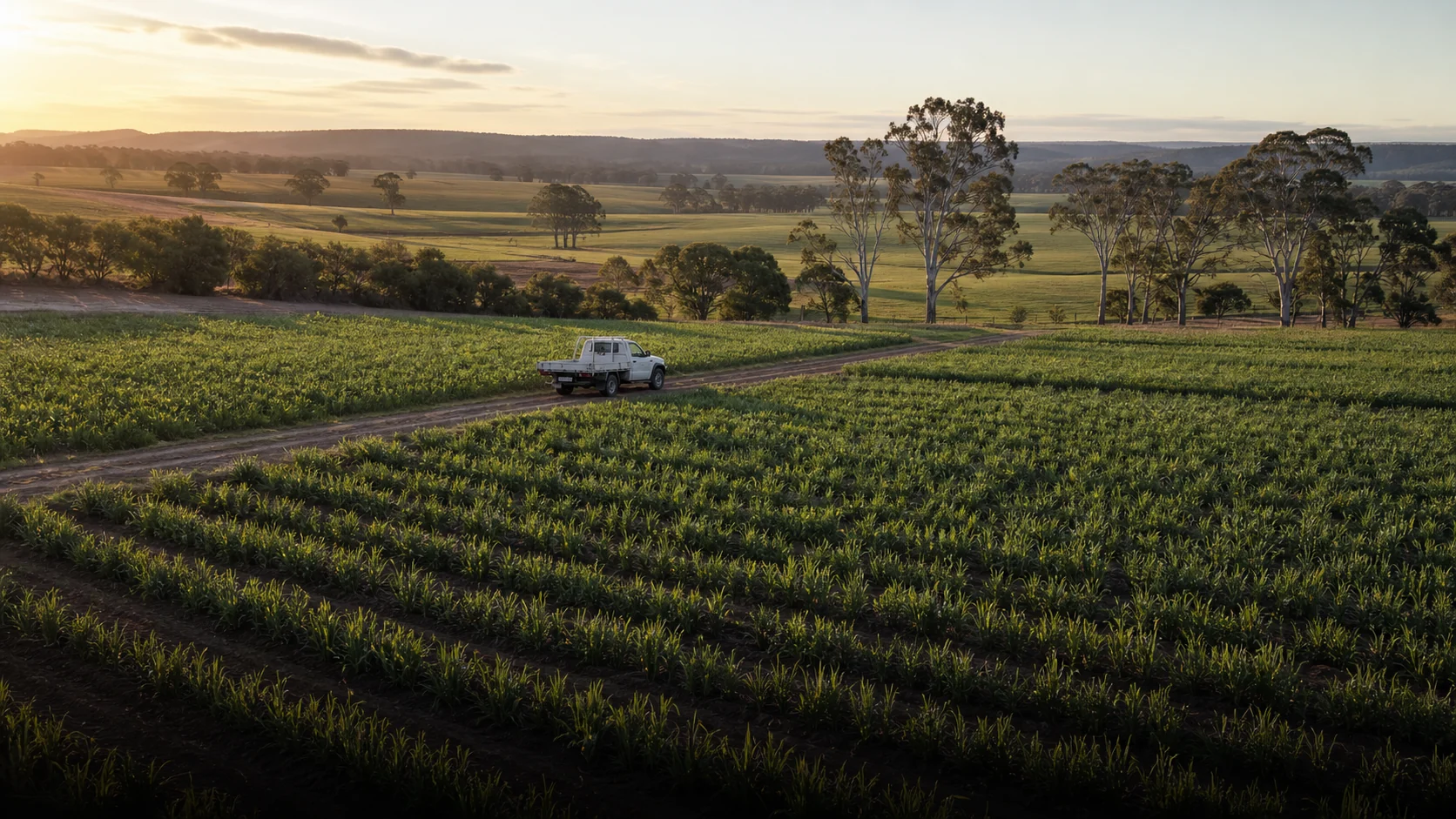
Built for the ute tray
Conductivity is measured directly — the same property used in Australian zone mapping and salinity work. Moisture and temperature keep comparisons honest.
Every reading carries GPS and a paddock. Open the map later and see exactly where you stood.
TerraTactics Field Intelligence holds readings on the phone and syncs when you next have signal. No lost samples at the gate.
Download a spreadsheet or walk an agronomist through TerraPortal. Screened values are labelled. Commentary cites the evidence behind every observation.
In the paddock
USB-C into your phone. Insert the five-pin tip, wait a few seconds for moisture, EC and temperature to stabilise.
One tap stores the measured trio plus screened pH and NPK, with the time and GPS point, into your farm record.
Come back to the same spot next month or next season. The portal shows how the record has moved — and which points earn a lab suite.
 ~60s
probe to saved record
~60s
probe to saved record
What we will not claim
TerraProbe readings help you see change and ask better questions. They do not prescribe fertiliser or lime rates, replace accredited chemistry, or substitute for a qualified local agronomist. When a decision needs a lab or an expert, we say so plainly.
Before you buy
The public demo is the actual farm record — read-only — so you can see how probe readings land on a map and across a season.