
Trained for this stack
Australian paddock English
Plain paddock English, from your record. Season, enterprise and region come from your account and the window you selected — not invented local folklore.
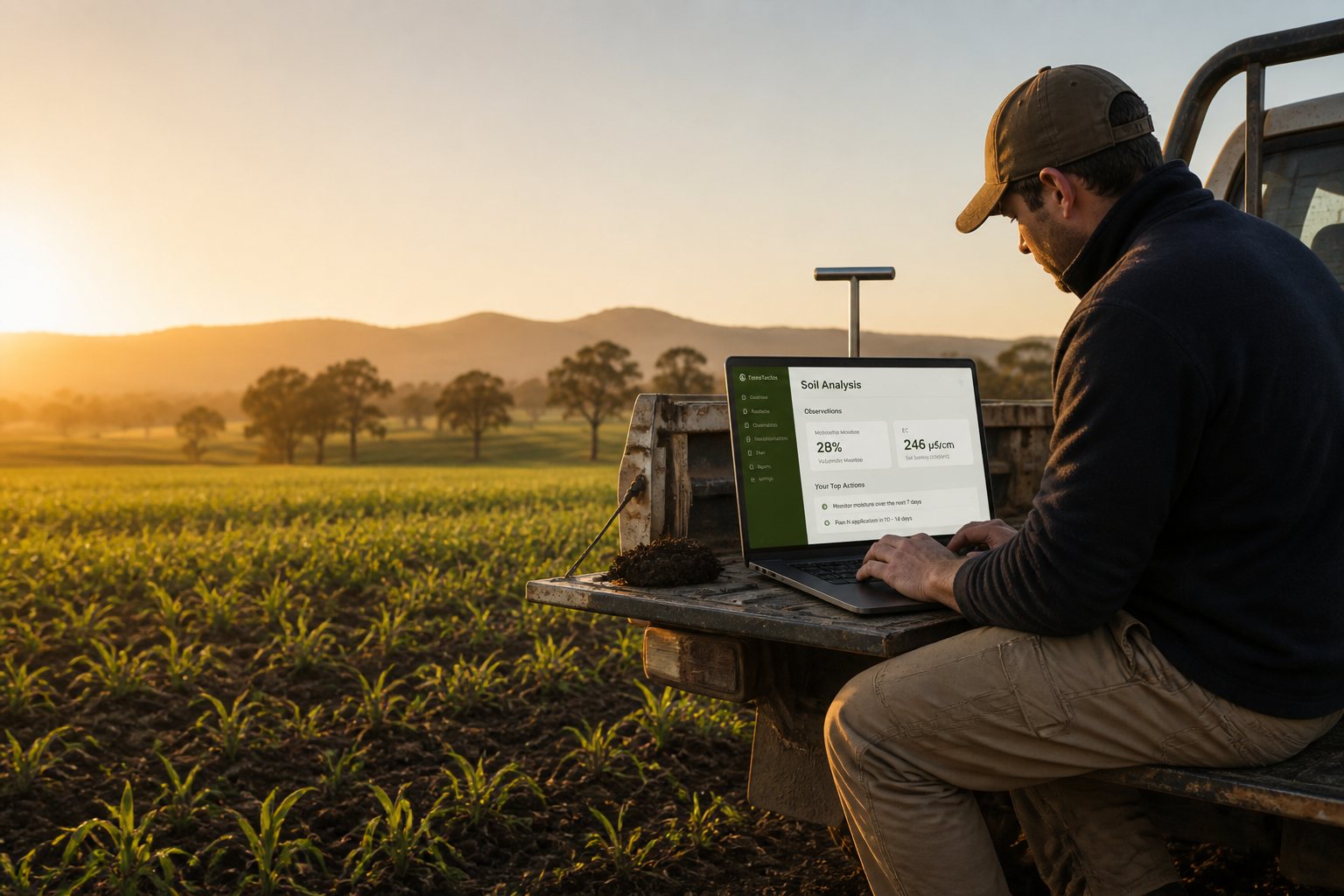
Specially trained, self-improving
A specially trained and self-improving TerraTactics AI model. It reviews the readings you select, puts the pattern in plain language, and helps you ask the right questions — so laboratory tests and agronomy time go where they are actually worth the invoice.
What it does
Soil Analysis is a trained TerraTactics model that only sees the paddock record you choose: TerraProbe screens, compaction notes and laboratory reports you attach. It turns those numbers into a briefing you can follow, then flags where accredited chemistry or a local agronomist should take over — so you are not paying for a full lab suite or a paddock walk on every guess.
Spend it wisely
Analysis cites moisture, EC and temperature — the measured core — and treats screened pH/NPK as indicators, not lab milligrams per kilogram.
When numbers disagree, drift, or a decision has money attached, it tells you to send a representative sample to an accredited laboratory rather than treating a colour kit or a probe screen as a rate.
Print or share the run so the conversation starts with the same points, dates and caveats — not three spreadsheets and a memory of last winter.
How the model is held
Trained for this stack
Plain paddock English, from your record. Season, enterprise and region come from your account and the window you selected — not invented local folklore.
Evidence first
Measured values and dates sit on each observation. Screened NPK from EC and penetrometer context are labelled so they cannot masquerade as one lab result.
Hard stop
It will not name a fertiliser, a lime product or a rate. Natural-first management questions are allowed. Chemistry spend is an escalation, not an output.
How you use it
Use it to frame the next question, see where variation sits, and spend sampling, accredited testing and agronomy hours where they change the outcome — alongside your judgement, not instead of it.
Run it on a real farm record
Soil Analysis is on Grower and the plans above. The demo shows the same Insights screen — look around, you cannot change it.